Showing posts with label Princeton. Show all posts

Thursday, August 20, 2020

New York, I'm Coming Atcha from Appalachia

(Yes, the title rhymes. In Appalachia we say Appel - latch - uh.)
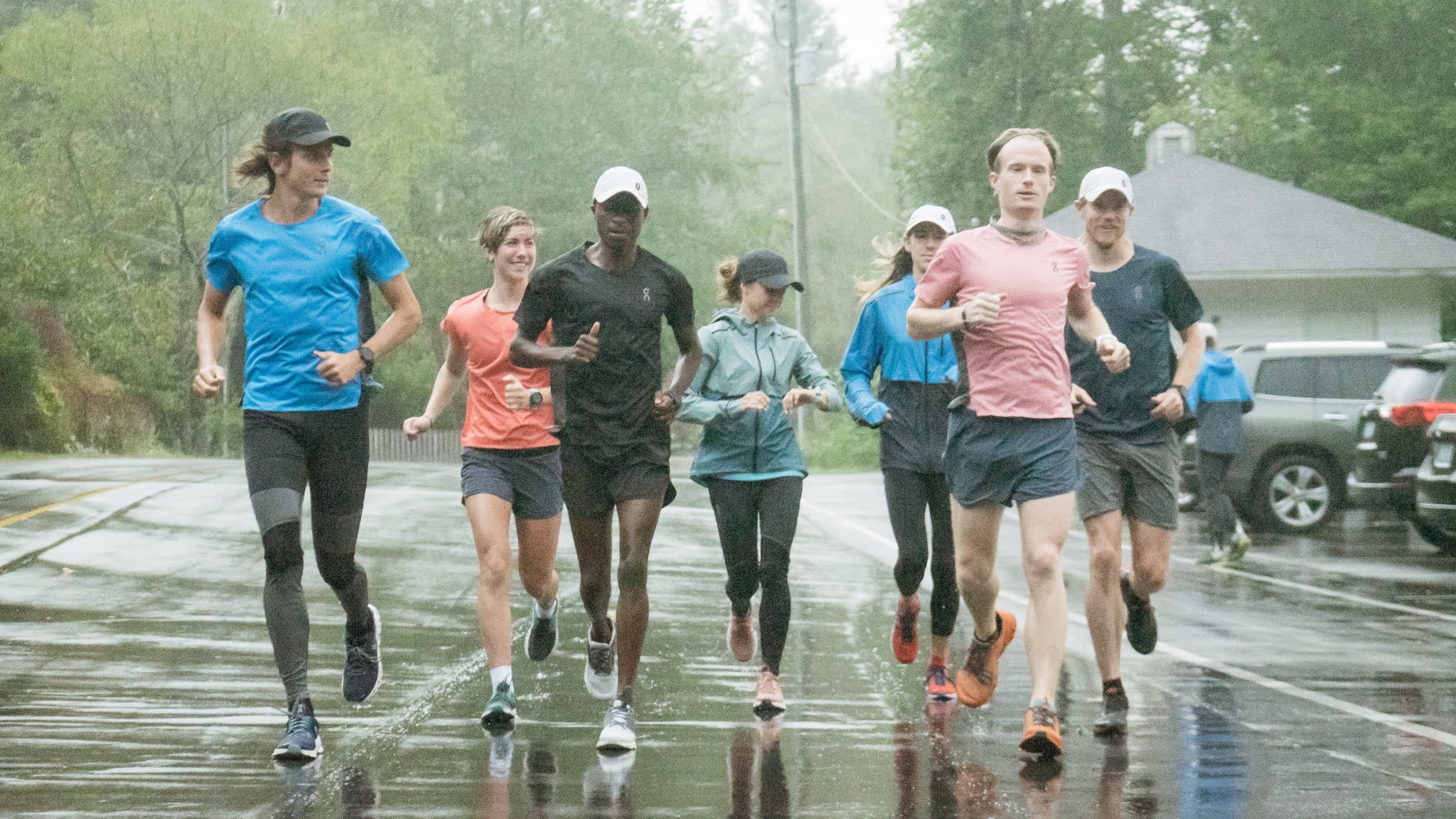
It's not goodbye, just see you later

I'll get the announcement out of the way early: I'm moving to New York City with Joanna!

Fittingly, I'm starting a new life chapter in the same city where the special moment I consider to have opened this past life chapter took place:

In the Fall of 2011, anemia nearly cut the legs out from under my senior cross country season at Princeton. But a ferritin test late in the game prompted me to start taking iron supplements, something I'd never done. Within two weeks, workouts began indicating that something positive was happening with my fitness: I wasn't struggling to hit fast paces anymore. Unfortunately it was too late. I wasn't named to travel with the team to the NCAA championships in Terre Haute; I simply hadn't proven to the coaches I was ready in time. But there was a consolation: the IC4A cross country championships held the same week in Van Cordtland Park, the Bronx. Many northeastern teams that didn't make the national meet as well as the "B" squads from schools that do make NCAA's compete at IC4A's.

Do you know what it feels like to finally have your hard work pay off at the eleventh hour, when it was beginning to look totally futile? I'd spent the summer of 2011 running month's worth of 100+ mile weeks at altitude in Park City, UT, chasing my team mates on tempo and long runs, lungs burning for what I only now know was anemia. I was over trained, and when the season began the results showed it. 25:53 and 26:01 8k performances, about two minutes slower than what I'd run a year earlier. I wasn't even close to making the 12-man Heptagonal (Ivy League) conference team, a hard pill to swallow for a senior.

But the summer training in Utah didn't go away. My blood iron levels on the rise, I was less handicapped. We showed up to IC4A's in New York, and I led Princeton's junior varsity squad to an individual and team win. I ran 24:49 for 8k, not bad on the hills of VCP, with fellow Tigers in a tight group not far behind. Celebrating our win with my team mates after, I felt that a switch had just flipped. I had turned a corner. 

On that day I started becoming the runner who would break four minutes in the mile, set school records at Princeton and Texas, and go on to run professionally. On that day, running grabbed hold of me tightly, and it led me all the way through my twenties to now.

Since then, I've spent the better part of decade in pursuit of a simple but evasive quarry: running faster. Living and breathing running at ZAP, sacrificing a "normal" life in the North Carolina Blue Ridge Mountains. Two things from this place are going to leave an everlasting impression on me: the physical landscape and the people.


The view was different every day I lived here

Here it is rhododendron forest, ancient gray rock heaving at crazy angles out of ridge tops, and mountains that fold and fold to the horizon. If you're running, you're inevitably next to a creek or river, and the steeper the road or trail you're on, the smaller and younger the water. The topography funnels us around here, controls where we go, and sculpts us physically and mentally. I've been profoundly inspired by these ancient mountains.

The people: the team mates and coaches at ZAP who each left their own unique impression on me. A group of runners is a like a cast of cartoon characters: each with strengths and weaknesses that are amplified and caricatured by the demands of our sport. I could write a book about each one of them. Few work-life situations could have developed in me the type of empathy, patience, and love for others that ZAP has.

The people.
The people.

Having lived in the North Carolina mountains for seven years, Manhattan is going to be quite a lifestyle change. But none of my running goals are modified. I'll still be affiliated with ZAP and On Running, training for next year's Olympic track trials in Eugene, and looking forward to a career in the marathon. In moving to the city and working a job in engineering (hire me!), I'm taking a leap that will force me to radically alter what daily training looks like, and more importantly, provide distraction from running. Which, believe it or not, is a good thing.

I never could quite sit still at ZAP. Pro running is about spending a few hours working really hard, and then chilling for the other 21 hours of the day. The best athletes can turn their brains off and let stress-free recovery take place. I always wanted to be producing: building something, starting a company, climbing a mountain. I alternately fought against and accepted relaxation throughout my entire seven year career at ZAP. I'd tend to categorize activities as either worth my time or a waste of my time, which can become unhealthy. Sometimes your best memories with friends or your clearest ideas come when your time isn't structured.

In New York, I hope to appreciate my free moments more. To make running a release.

I've given full-time running a really good shot. I competed with success at everything from the 1500 to the marathon, lived and trained with 21 other team mates and friends over the years at ZAP, and competed all over the country and world. It was a hell of a good time. 

But the thing is, the hard work has not yet paid off.

Here's to knocking it loose at the moment it's really beginning to look futile.
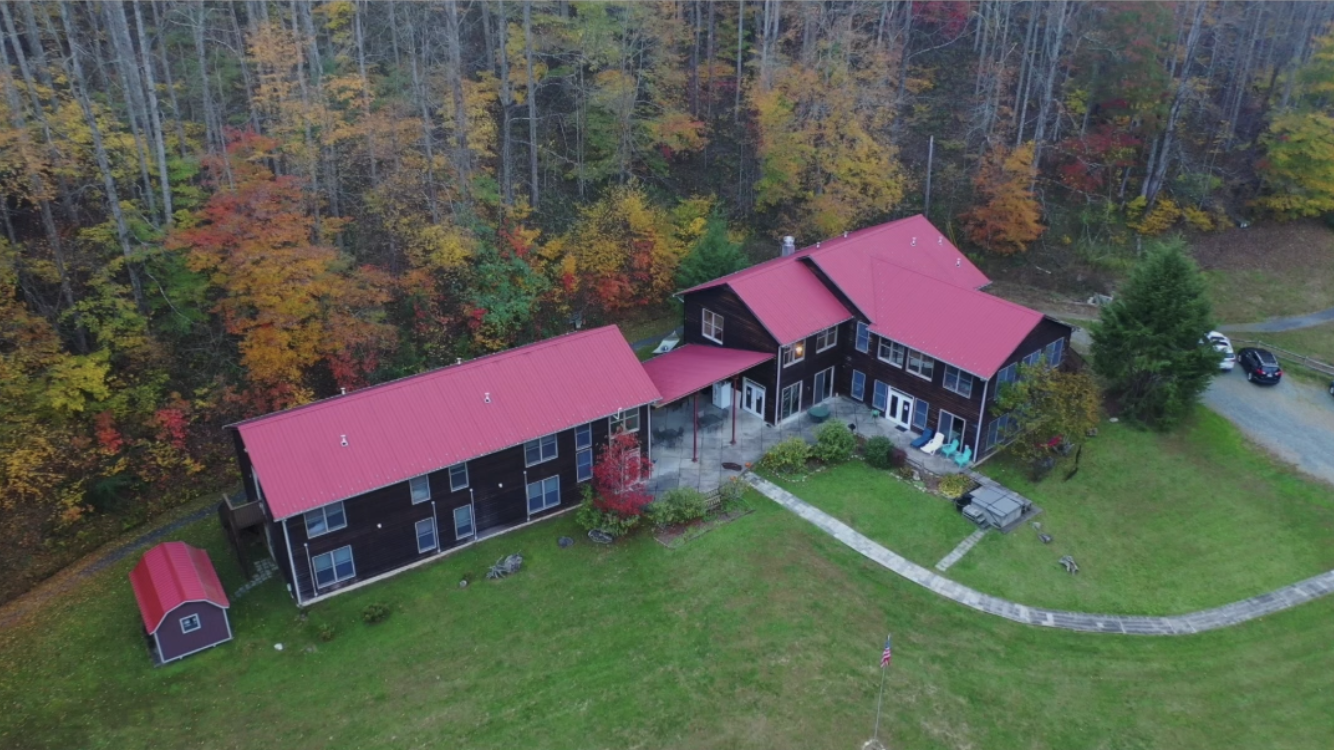
Really going to miss this place.

- - - - - - - - - - - - -

Little update on training & racing amidst the pandemic: We somehow managed to sneak two real races in this summer - the WISCO Mile in Milwaukee, where I ran 4:06, and the Music City Distance Carnival in Nashville last weekend, where I ran 13:45 for 5k. Both did a good job with COVID precautions, especially MCDC, which required two negative tests the week of the meet. There is a possibility of competing in a 10,000m next weekend in LA, depending on city health department permissions. 

Joanna and I are carrying out our mandatory 14 day quarantine in NYC, having traveled from North Carolina. We bought a cheap treadmill to train on while we're holed up in the apartment, so that's going to be a lot of fun. In all seriousness, I believe it's possible to maintain a high level of training AND good levels of virus precaution. You just have to be willing to do a little extra work and be a little uncomfortable at times. That goes for whatever your passion is: find a way to adapt.

Thanks for reading.

MCDC 5,000m in Nashville 8/15/2020

Saturday, December 20, 2014

Going Fast and Taking it Slow

On an unseasonably warm late September 2011 day in Bethlehem, Pennsylvania I'm trying to prove myself.  A mile into the Paul Short Invite gold 8k race, I navigate slime slicked grassy spots, the course softened by prior races as if masticated by some giant possessing thousands of half inch spikes for teeth.  My thighs are already beginning to burn and I begin to think, not again.

That summer in Park City, Utah the Princeton Tigers had trained hard.  Some of us older guys put in multiple triple digit mile weeks at between 6000 and 8000 feet, constantly on hills.  We were running 10 mile tempo runs and 20+ mile long runs in August, and to me they often felt nearly like races.  I'd wake up and need several minutes to get myself out of bed, fighting through the desire to just fall back into the pillow.  But I viewed it as typical training fatigue, and believed all the work would cash out during an epic senior cross country campaign.  That fell into doubt when the races started.  First a no-finish on the Bronx's Van Cortlandt Park's course in early September.  Then at Paul Short I faded from that 4:51 opening muddy mile all the way to a disheartening 26:01 clocking, totally disengaging from the race.  Some moments in practice were promising: I'd be able to hang with my workout group for shorter bouts of fast running.   But I couldn't string together five consecutive miles without rest in a race.

I watched the snowy and muddy 2011 Heps Championship from courseside in Princeton, not having broken into the top twelve on the team - the year before I had been in our top five for much of the season.  I was working hard and injury free: my performances didn't make sense.  The not knowing why bothered me - I would almost rather be totally injured for the knowledge of it.

That is until a blood test showed I had a ferritin level of seven.  Coaches, trainers, and doctors cite various numbers for appropriate ferritin levels, but they'll all agree that seven is extremely low.  Most likely the deficiency came on during the summer while I was potentially overtraining at altitude.  I began taking ferrous sulfate supplements - I hadn't ever before, and just 17 days later things turned around.  We held a 5k track time trial for the guys not on the Nationals cross country team.  As planned, we ran 70 second laps to two miles in 9:20, at which point I knew my red blood cells were back.  I ratcheted down the pace to 66s laps, closed with a 4:21 mile, and ran 14:12, a new PB.  The next weekend I and Princeton won the IC4A Cross Championships, getting revenge on Van Cortland Park.

The late fall turnaround continued into spring.  I obliterated every personal mark from 1500 to 5k, broke four, won Penn Relays titles, and had success at the conference, regional, and national levels.  I learned that year that every inch of work you put in helps you somewhere down the line, even if years later.  Through 7/8 of college I trained at a much higher level than races indicated, but it fortunately showed in the end.  I ran a lot of miles probably too fast and too tired, but they weren't for nothing.  They stayed in my legs, waiting for health to return.  When it did, I became a totally different runner with a different perspective.  I formed an altered point of view of the unwanted and unexpected.  


Label failure differently.  Make the good times models and the bad times lessons.  What was once failure - a godawful race, a bad workout, an injury ridden season - becomes success.  You successfully failed the race.  You learned something.  That terrible race is a part of You now.  You can think back to it, hate it, laugh at it, but whatever you do, make the future better.  You define what losing really is for yourself.  When you finally do win, it's only because you've lost many times on the way there.  Training is a microcosm of this:   A calculated series of blows to the body in pursuit of the triumphant gain in fitness.

I may be older and wiser (probably not, I just got carded twice in half an hour even though I'm 25) but running never stops challenging me.  This fall has been about learning to be patient.  Our training has focused on aerobic base building: lots of fartleks, hill climbing, tempos, and surges on long runs, to a degree I sometimes have been uncomfortable with.  At times I feel the need for some faster, more specific workouts in practice in order to execute well in races.  The week after a bombed race in Boston in October, I brought this up to Pete in a pretty uncharacteristically demanding way.  He just looked at me and said, "I need you to be patient.  I know you are going to run fast this year."  Something as simple as that calmed me down.


Your 2014 USATF Club Cross Country team champions, Zap Fitness.  L-R Andrew Colley, Cole Atkins, Joe Stilin, Tyler Pennel, Chris Moen, John Simons, Griff Graves.  Not pictured are assistants to the assistant regional manger George Alex and Cameron Bean.  Photo credit Michael Scott.
On Saturday I was back in Bethlehem on Lehigh's cross country course for the first time since that race in 2011.  I finished tenth and the team won in probably the deepest Club Cross Country Championships in history, showing I could run cross country without necessarily needing the battery acid intervals and repeats I adore so much.  I was reminded how sometimes I need to just shut my mind off, pull the plow in training, not ask so many questions, and run.  If you stay in it long enough, things have a way of working themselves out.  And many times, turnarounds happen when you least expect them.

Monday, September 15, 2014

Input the Output

Stress is a killer.  Tensions do cause neurosis.  Uneasiness of the heart can lead to despair.  But without them, we remain inferior to our true selves.  Live if you will a life without risk .  Avoid the forge, the fire, the flame.  But know that joy and happiness and the good life come only as unexpected interludes in the endless, stressful, tense and restless journey to become who you are.  There is no easy way.
       - George Sheehan, Dr. Sheehan On Running

August marked ten years since my running career began.  On that first muggy summer day, I got out of my dad's Toyota pickup in jeans and Vans, unsure whether showing up in shorts to captain's practice was, well, cool.  Once past that barrier of freshman terror, I left the jeans in a bush and went running for the first time.  Before, I'd known running in more playful terms: short sprints on the beach, races against my uncle for quarters, and the mile in gym class.  But this was the first time I'd run: crossed street after street, deliberately continuing miles after I wanted to stop.  Going on runs would end up sculpting the next decade of my life.  It's been a distraction, a social outlet, a high, an ego booster, and a way of living.  Once it stood squire to engineering school, often beaten by it, and my life still followed an (oval made of rubber with lines painted on it) typical of many American students.  Now that Zap Fitness and Reebok have given me the ability to train full time I'm unusual, pursuing my dreams in a way many people, runners or otherwise, cannot.  So what happens in a one dimensional environment in which focus is paramount and results are key?  What does running become when you remove the distractions?

August 2008, on another hot and humid afternoon.  In the first workout of the season, the Princeton men's cross country team was setting out on a ten mile progression run.  Coach Steve Dolan instructed us to run together for the first four or so miles before the older, more experienced runners were allowed to accelerate .  We ambled down the hill from campus to the cross country course, and I started to feel feisty, like I could run with anyone.  We looped the course and hit the tow path, u-turning around wood bridge to the other side of the canal.  And then we started rolling.  Back west along Lake Carnegie, gathering speed and testing each other's summer fitness.  I saw my first year class boldly rallying near the front of the pack next to All American senior Michael Maag.  Six miles in we turned off the tow path towards legendary bean fields and I began to notice the cicadas buzzing.  The heat.  The acid started filling my legs and as we re-entered the forest, I was a dropped fly.  Eight miles into the run Dolan was waiting in the Institute Woods, giving me and a few others the option to stop early, which I shamefully but thankfully did.

My version of the classic freshman wakeup call, the workout humbled me.  In high school, running had been easier.  Winning came often.  I was driven by outer confirmations of greatness: state rankings, news articles, medals, records, our team's success.  Feedback was immediate and running followed a more clear input equals output pattern.  But now I had to find a way to run from the bottom of the totem pole.  For all the work I put in, the most glory I felt came in moving up a workout group or making a travel squad.  Motivation needed to shift its source from outer sources to internal ones.  In the first couple years of college I didn't make an impact, but inside I was learning more than I could have when things were easy in high school.  I learned how to manage time, how to lose, how to be a team mate, and how to keep coming back no matter what.  During that drought of outer verification I came to think of running in more simple terms.  I began to put less pressure on myself.  I thought less and less about pace on training runs, and I started truly taking easy days easy.  I spent less energy preparing mentally for races and allowed instinct to guide me.  I was running because I actually loved running itself.  When during senior year the wins and records returned, it was that much easier to run. 

Now treading the atypical path of full time American runner, I know I won't last if I frame running as a trophy hunt.  There are no distractions like school or work to fall back on during times lacking positive feedback.  Instead I invest confidently in long term training, enjoy the process, and celebrate even the smallest victories.  This mentality might come more naturally for some people, but I'd wager that for most, "running wisdom" comes with time.  For the average runner, and even for the pros, it boils down to you.  And running.  You and running, exactly like it was on the first day, when you were afraid to show your skinny legs to the world.


- - - - - - - - 


Back to ground level and a little update on what I'm up to:


After my last track race in August I took two weeks totally off from running, gained ten pounds, and regrouped a bit.  I'm now a couple weeks into a volume ramp consisting of only once a day running.  Last week was 87 miles in singles, and this week I'll see my first real workout back in the form of a 7-6-5-4-3-2-1 minute piece Fartlek before heading to Providence, RI for the CVS 5k / USARC 5k Championships on Sunday.  I'm training through this race and relying on residual track fitness, but the minimum goal is top 10 so I can qualify for the .US 12k Championships in November.  After CVS the next race will be the Izumo Ekiden in Japan in October.


Many of my goals for this fall are process-oriented.  I will race several times, but the overarching design is to build strength for track season.  Most of them are simple, back-to-basics reminders of things I got away from during track: consistently longer long runs, fewer double days (more singles), weekly medium long runs, and more frequent tempo runs.  I've done a solid job with drills, strides, core/stability and hill running and I'll continue those routines.  I'm engaged in an all-out assault on my iron levels (which have caused me problems before) involving daily ferrous sulfate doses in both liquid and solid forms along with eating red meat every other day.  There is hard training in the months ahead and I'm excited to be better than I ever have been.


Fall Racing Schedule:
Date Race Name Location Venue / Distance
September 21 CVS Downtown 5k / USARC 5k Champs Providence, RI Road 5k
October 13 Izumo Ekiden Relay Izumo, Japan Road 8k Relay
November 16 .US 12k Championships Alexandria, VA Road 12k
November 27 Manchester Road Race Manchester, CT Road 4.748 miler
December 13 USATF Club Cross Country Bethlehem, PA Cross Country 10k

Friday, October 4, 2013

Ten Minute Battle: Izumo Ekiden, Japan Pre-Race

On Wednesday I board a Boeing 777 for a thirteen hour flight to Tokyo.  I am part of the nine-man Ivy League Select relay team bound for Izumo, Japan for the 25th edition of the All Japan University Izumo Ekiden Relay Race.  It consists of six stages run on the roads of Izumo in the Shimane Prefecture with lengths 8.0 kilometers, 5.8k, 7.9k, 6.2k, 6.4k, and 10.2k for a total of 44.5 kilometers.

Roughly the Japanese equivalent of the American fall cross country system, (but on roads) Ekiden racing is run at the high school, university, corporate, and international levels all over Japan.  Races vary in number of stages (usually between five and nine) and length of stages (from 3k to 13k).  Our race in Izumo serves as the kickoff for the university Ekiden season and is part of the "big three" of university Ekiden events, along with the All-Japan Collegiate Ekiden Championship in early November and the Hakone Ekiden in January.  Most of the races, including ours, are gender-specific, but the International Chiba Ekiden, which draws teams from all over the world, features stages run by both men and women.  Ekiden is a unique Japanese sporting event: these races draw hundreds of thousands of spectators roadside and attract huge national television audiences.

Alone, a trip to Japan is an amazing experience - but I believe we are going to encounter more than the average American tourist ever will.  Sure, we'll see the sights, enjoy the food, language, and culture of the country.  But on Monday the fourteenth of October, when we line up alongside twenty one Japanese teams in front of the Izumo Taisha Shrine,  I expect we'll be seeing and feeling, through the hurt of the race, a lot more.

Of the week long trip, I am specifically looking forward most to an approximately ten minute period: the last ten minutes of my relay leg.  I have imagined it many times now: an unspoken understanding, an absolute focus,  a complete determination to win in my competitors.  I have heard and read of, and experienced myself in the US and most recently in Belgium on the track, how fiercely competitive the Japanese are.  They won't pack up.  They won't wait and kick.  They will be doing everything in their power to deliver the sash to their next man with a lead, to give their remaining runners a better chance.  When the freshness of the start has worn off, the acid has begun to accumulate, when the pounding of the road begins to add up; that's when I'll learn about Japan.  From men from Tokyo, from Yamanashi, Komazowa, Fukuoka, and Sappro.  From places I've never been to, and perhaps never will.  I'll learn a little bit about each of them in that ten minute battle.

Where the 44.5 kilometer relay road race will start with an 8 kilometer stage: outside the Taisha Grand Shrine in Izumo, Japan.  The Shrine is dedicated to the Shinto god of marriage, Okuninushi-no-mikoto.
I have huge respect for who us Ivy League boys are up against.  In the fifteen years the US has sent an Ivy team to Izumo, the highest we've finished is a respectable eighth.  The quality of competition in Izumo is stellar - I would venture to predict that the winning team there would do a great deal of damage at NCAA D1 Cross Country Championships every year (yes, even against Wisconsin or OSU)

In recent editions of the race, guys from outside the Ancient Eight have been used on the American team, potentially expanding our firepower.  But this year the Japanese required Ivy Alumni exclusively, and we're bringing a very good team.  All of us have continued training and racing at a high level since college.  We have speed in guys like Kyle Merber (Columbia, 3:35, 14:02) and Trevor Van Ackeran (Princeton, 3:39, 8:46 SC), who now run for NJ*NY track club.  We have strength in Dan Lowry (Brown, 3:59, 13:34, 29:22), Brendan Martin (Columbia, running for Hansons-Brooks, 14:06, 64:38 HM), Tommy Dialynas (Princeton, 29:41), Ethan Shaw (Darmouth, 14:06, 29:17, 64:45 HM), and Jonathan Gault (Dartmouth, 14:25).  And we have good combinations of strength and speed in Mark Amirault (Princeton, 7:53, 13:45) and myself (Princeton, running for Reebok / Zap Fitness, 3:39, 7:49, 13:33).  Many of us have former team mates in the group, making us a cohesive unit, much like all the Japanese teams will be.  And we're coached by 1976 Boston Marathon Champion Jack Fultz - that can't hurt.

I hope to take away from this trip a new perspective on running - one that reflects the culture and work ethic of the Japanese.  The more I see of the world, and the more I learn about athletes outside the American system, the better a competitor I become.

The teams competing in the 2013 edition of the Izumo Ekiden on October fourteenth:

1. Aoyama Gakuin University
2. Toyo University
3. Chuo University
4. Hokkaido University Ren selection
5. Tohoku University Ren selection
6. Nippon Sport Science University
7. Komazawa
8. Teikyo University
9. Waseda University
10. Juntendo University
11. Meiji University
12. Hosei University
13. Chuogakuindaigaku
14. Hokushinetsu science Ren selection
15. Chukyo University
16. Kyoto Sangyo University
17. Kwansei Gakuin University
18. Hiroshima University of Economics
19. China Shikoku University Ren selection
20. Nihonbunridaigaku
21. First Institute of Technology
22. Ivy League selection

Monday, February 18, 2013

Smileage Addiction

Being a relatively injury resistant runner, (always knock on wood when you say something like that) I've had the ability to run "pretty high volume" (mileage per week) throughout my career.  Injury  proneness places a definite upper bound on volume depending on the person, but there's a gray area just underneath where an athlete is made or betrayed.  By themselves.

For me, volume has always been somewhat of a question mark - I'm still experimenting with how much feels best.  And when you try to isolate variables for results that take seasons and years to produce, the process is not simple.

Sometimes you just gotta do less, Pepiopi.
One problem with running high volume is that it can be addicting.  Finishing a 100+ smile week makes you feel badass when you write those three digits in your running log.  But when it comes time to reduce volume during race season, the heavy volume mindset can be difficult to get out of. There's a temptation to lose confidence in training while lowering mileage.  When you rely on confirmation of your fitness through training benchmarks like weekly mileage, the lengths of your long run, and paces you are able to sustain on hard runs, finding it in other ways can be difficult.

It was during my senior year at Princeton (2011 - 2012) that I really started taking advantage of my potential by being smarter with smileage.  During the summer prior to cross country, I trained hard at altitude in Park City, Utah, running hundred mile weeks beginning in late July.  During the season I ran three awful races, barely breaking 26:00 for 8k in each and finishing far back in the field.  I didn't change anything, believing that a breakthrough was around the corner.  It wasn't.  In late October, when we found that I was anemic, I finally gave my body a chance.  I took a few days off, began taking iron, and decided my mileage would not exceed 80 mpw for the rest of the season.

This is Smileage.
Some combination of the iron, the smileage, and most importantly the refreshed mindset I had after learning there was a reason for my struggles jump started my running.  Just three weeks after slugging through a 25:53 for 8k at the Princeton Invite, I ran a personal best 14:13 5000 in an intersquad time trial on the track, closing in 4:20 over the final mile.  Two weeks later, I won the IC4A meet at Van Cortlandt in the Bronx.   Although my health during the season forced me to watch from the sidelines in Terre Haute at nationals later that weekend, I was riding a huge wave of confidence and momentum into the new year.

I had a lot of fun during the next track season.  Non stop personal bests, tapping into speed in the 1500, breaking school and Ivy records, winning two Penn Relays wheels, qualifying for outdoor nationals and nearly the Olympic trials all indicated that I had figured something out.  The increased amount of iron in my diet probably played a substantial role, but being more savvy with when to train hard and when to recover is what I think really caused the breakthrough.

Nigel knows about volume
When it comes time, I let myself just run, doing what feels natural.  Lifting the burden of having to maintain a certain amount of smiles every day is enormously relieving.  I put the displaced effort into workouts and races, using distance runs for recovery more than for aerobic benefit, their purpose in the base phase.  I forget about mileage goals - the miles runs themselves and just add up appropriately.  I do everything with the singular goal of feeling good.

I think some people forget that the point of competitive running is racing.  They focus so intently on training that they eventually prefer it to competition, in the worst cases developing a fear of racing because they feel more in control while training.  The worst thing to do after a poor race performance is go home and amp up the volume or intensity in an attempt to 'get better'.  The instinct should be the opposite.  Amongst athletes who naturally harbor extremely hard work ethics and competitive tendencies, freshness is totally underrated.  Smile : )

The term "smileage" copyright Tommy D., 2009