Showing posts with label On Running. Show all posts

Thursday, August 20, 2020

New York, I'm Coming Atcha from Appalachia

(Yes, the title rhymes. In Appalachia we say Appel - latch - uh.)
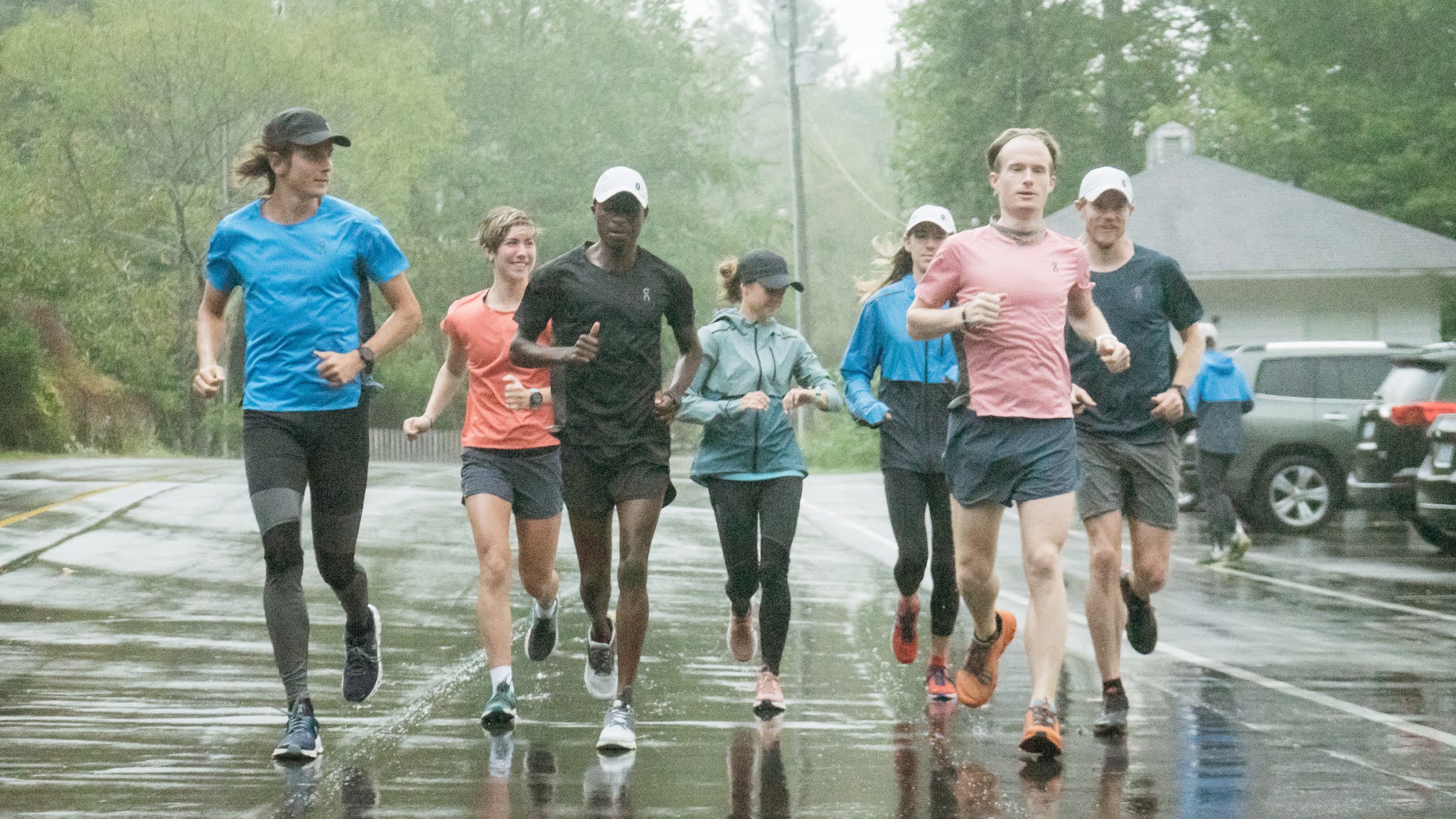
It's not goodbye, just see you later

I'll get the announcement out of the way early: I'm moving to New York City with Joanna!

Fittingly, I'm starting a new life chapter in the same city where the special moment I consider to have opened this past life chapter took place:

In the Fall of 2011, anemia nearly cut the legs out from under my senior cross country season at Princeton. But a ferritin test late in the game prompted me to start taking iron supplements, something I'd never done. Within two weeks, workouts began indicating that something positive was happening with my fitness: I wasn't struggling to hit fast paces anymore. Unfortunately it was too late. I wasn't named to travel with the team to the NCAA championships in Terre Haute; I simply hadn't proven to the coaches I was ready in time. But there was a consolation: the IC4A cross country championships held the same week in Van Cordtland Park, the Bronx. Many northeastern teams that didn't make the national meet as well as the "B" squads from schools that do make NCAA's compete at IC4A's.

Do you know what it feels like to finally have your hard work pay off at the eleventh hour, when it was beginning to look totally futile? I'd spent the summer of 2011 running month's worth of 100+ mile weeks at altitude in Park City, UT, chasing my team mates on tempo and long runs, lungs burning for what I only now know was anemia. I was over trained, and when the season began the results showed it. 25:53 and 26:01 8k performances, about two minutes slower than what I'd run a year earlier. I wasn't even close to making the 12-man Heptagonal (Ivy League) conference team, a hard pill to swallow for a senior.

But the summer training in Utah didn't go away. My blood iron levels on the rise, I was less handicapped. We showed up to IC4A's in New York, and I led Princeton's junior varsity squad to an individual and team win. I ran 24:49 for 8k, not bad on the hills of VCP, with fellow Tigers in a tight group not far behind. Celebrating our win with my team mates after, I felt that a switch had just flipped. I had turned a corner. 

On that day I started becoming the runner who would break four minutes in the mile, set school records at Princeton and Texas, and go on to run professionally. On that day, running grabbed hold of me tightly, and it led me all the way through my twenties to now.

Since then, I've spent the better part of decade in pursuit of a simple but evasive quarry: running faster. Living and breathing running at ZAP, sacrificing a "normal" life in the North Carolina Blue Ridge Mountains. Two things from this place are going to leave an everlasting impression on me: the physical landscape and the people.


The view was different every day I lived here

Here it is rhododendron forest, ancient gray rock heaving at crazy angles out of ridge tops, and mountains that fold and fold to the horizon. If you're running, you're inevitably next to a creek or river, and the steeper the road or trail you're on, the smaller and younger the water. The topography funnels us around here, controls where we go, and sculpts us physically and mentally. I've been profoundly inspired by these ancient mountains.

The people: the team mates and coaches at ZAP who each left their own unique impression on me. A group of runners is a like a cast of cartoon characters: each with strengths and weaknesses that are amplified and caricatured by the demands of our sport. I could write a book about each one of them. Few work-life situations could have developed in me the type of empathy, patience, and love for others that ZAP has.

The people.
The people.

Having lived in the North Carolina mountains for seven years, Manhattan is going to be quite a lifestyle change. But none of my running goals are modified. I'll still be affiliated with ZAP and On Running, training for next year's Olympic track trials in Eugene, and looking forward to a career in the marathon. In moving to the city and working a job in engineering (hire me!), I'm taking a leap that will force me to radically alter what daily training looks like, and more importantly, provide distraction from running. Which, believe it or not, is a good thing.

I never could quite sit still at ZAP. Pro running is about spending a few hours working really hard, and then chilling for the other 21 hours of the day. The best athletes can turn their brains off and let stress-free recovery take place. I always wanted to be producing: building something, starting a company, climbing a mountain. I alternately fought against and accepted relaxation throughout my entire seven year career at ZAP. I'd tend to categorize activities as either worth my time or a waste of my time, which can become unhealthy. Sometimes your best memories with friends or your clearest ideas come when your time isn't structured.

In New York, I hope to appreciate my free moments more. To make running a release.

I've given full-time running a really good shot. I competed with success at everything from the 1500 to the marathon, lived and trained with 21 other team mates and friends over the years at ZAP, and competed all over the country and world. It was a hell of a good time. 

But the thing is, the hard work has not yet paid off.

Here's to knocking it loose at the moment it's really beginning to look futile.
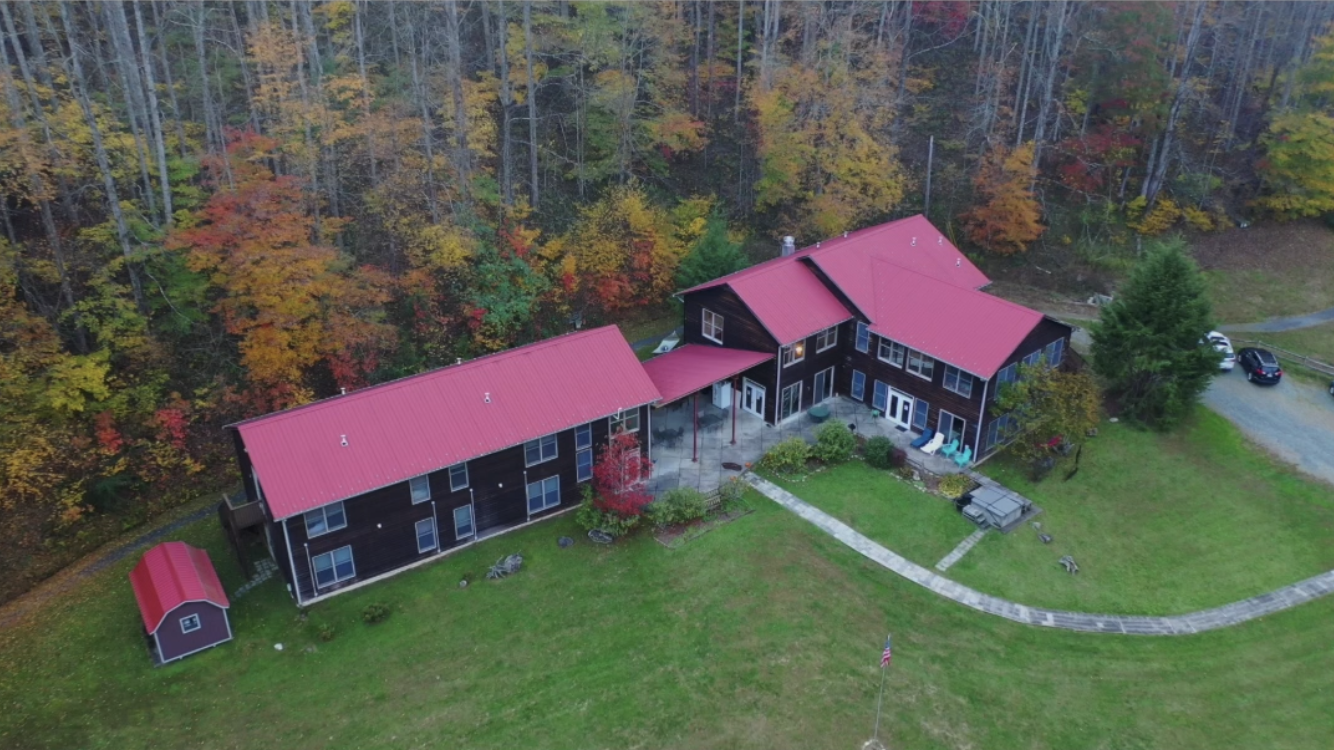
Really going to miss this place.

- - - - - - - - - - - - -

Little update on training & racing amidst the pandemic: We somehow managed to sneak two real races in this summer - the WISCO Mile in Milwaukee, where I ran 4:06, and the Music City Distance Carnival in Nashville last weekend, where I ran 13:45 for 5k. Both did a good job with COVID precautions, especially MCDC, which required two negative tests the week of the meet. There is a possibility of competing in a 10,000m next weekend in LA, depending on city health department permissions. 

Joanna and I are carrying out our mandatory 14 day quarantine in NYC, having traveled from North Carolina. We bought a cheap treadmill to train on while we're holed up in the apartment, so that's going to be a lot of fun. In all seriousness, I believe it's possible to maintain a high level of training AND good levels of virus precaution. You just have to be willing to do a little extra work and be a little uncomfortable at times. That goes for whatever your passion is: find a way to adapt.

Thanks for reading.

MCDC 5,000m in Nashville 8/15/2020

Thursday, June 13, 2019

Hauling, Storing, Burning

Our neighbor, John, seems to always be at work hauling, cutting, and storing firewood. John’s small cabin nestles into the hill just above ZAP’s large field. In the mornings the smoke from his wood stove rises straight up to the join the mountain fog that hangs in our valley before the sun crests the ridge. Hauling, storing, burning, hauling, storing, burning. John has a TV, the glow of which often illuminates my otherwise pitch-black walk home at night from the ZAP facility. But even with modern conveniences, I think John still likes to rely on his wood stove. The means to stay warm, to live, becomes much of life itself. Cutting and burning, going up in smoke, the next morning a new round of logs, always the same.

Likewise, across a little stream and down the hill from John, we of the ZAP Endurance running team sleep, eat, and run. Like worms that tunnel through the earth, our digestive systems sorting through food that in a moment will be called up for forward locomotion. Burned off and shat out, thousands of pounds of food a year thrown into hundreds of runs that end where they begin. Like John and his wood and his cabin.

I’m training for my second marathon. I had the fortune of a good first experience at the marathon in December at Cal International (CIM) (2:13:19, fourth at US Championships), something not everyone gets lucky enough to have.

On this second time around, the overarching theme has been to not to overdo it. Pete likes to cite the stat that almost half of elite American’s marathon personal best times happened in their debut - they never PR’d again. If we train like we did in the fall, with a few calculated changes here and there, we should be set up for a progression in performance. That’s the ideal scenario.

Training went so smoothly for CIM that it’s almost not fair that I have to replicate it now. It was a no injuries and great workouts almost across the board affair, with a nice tuneup race at the Pittsburgh 10 Mile in November. To find that smooth, easy rhythm again, things would have to go nearly perfectly.


Shared sacrifice on Railroad Grade Road, Todd, NC     6/4/2019

A month into specific training for Grandma’s marathon in Duluth, MN, things were not going perfectly. I had to admit defeat on a long run and couple of workouts, and ran poorly in our return to Pittsburgh for the half marathon last month (65:08). Fortunately I wasn’t dealing with an injury. But as my team mate Brandon points out, sometimes running badly with a healthy body can cause hand wringing: you don’t have a concrete reason like an injury to pin the shitiness on. The only marathon training I’ve known being great marathon training, it was tempting to be concerned.

I took a walk around the ZAP loop trail after getting back from Pittsburgh with Pete. He reflected, “for a somewhat intellectual runner, and someone who’s been in this sport for so long, I’m often surprised that you let tough races get to you so easily.” 

I appreciate Pete’s honesty. He’s right: I often dwell on isolated performances and training sessions when I should be looking at the big picture.

ZAP’s late founder Andy Palmer said “the Mind is the Athlete”. It’s written on our coffee mugs and T shirts. The phrase rings true, but the coveted instructions for how to actually go about obtaining a high performing mindset are left for the coffee mug beholder to figure out for themselves.


Hanging out in the chase pack during in the Pittsburgh Half Marathon     5/5/2019
After Pittsburgh I took a very easy week to refresh my body and mind. I tried to be honest with myself and think about what really makes a great athlete tick. I returned again and again to the idea of an intangible aspect of preparation and performance. Something beyond workout plans, weekly mileage, and all the numbers. 

You can call it mojo, or confidence, being in the groove, or painting happy trees. No one of those terms describe it wholly. The TED Talk popularized “flow state” concept comes close. The flow state is a happy medium between the challenge you’re working towards, and your skills and abilities. Too big of a challenge for your ability level, and you suffer anxiety. On the other hand, engaging in something without enough difficulty is boring. Your personal flow state runs somewhere in the middle.

As competitive runners, we’re constantly knocking up against the top side of the flow state channel, racing athletes that challenge us, that on paper are supposed to beat us. This is how we gradually improve. Some portion (hopefully less than half) of the time, we’re disappointed with the result. (We have to be, or running would be.. boring) If we put a lot of stock in a bad result, we run the risk of drifting up into Anxious Land, which isn’t helping us, or anybody, except our competition.

The training you do is the training you do. Your competition is your competition. All the fartleks and interval sessions and tempo runs and long runs are the tried and true tools we use to improve our fitness. Not much is changing there.  

But as Andy Palmer reminds us*, fitness is not the sole component of “How Good You Are At Running”. 

What if you could get back to the flow state without changing your fitness or the challenge you face?

If there ever was a secret to success and longevity in running, it is finding the method by which you, personally, bring yourself back into a flow state, even when in dire straits, and stay there. 

How?


800m repeats in Boone, NC towards the end of our marathon buildup      5/31/2019

Realize that a high performing mindset can come to you on its own. There are only so many things you can control, and your mind is not always one of them. I used to think my head needed to be a certain climate in the days and hours before a race. If it wasn’t, I was screwed. I would repeatedly try to force my thoughts towards the focus I’d had during some great run of the past, holding it up as a golden example.

I was wasting energy, becoming anxious over my mindset. Getting back to the flow state was better achieved passively and instinctively, rather than actively.

I’ve learned in fits and starts that it really doesn’t matter what’s going through your head before competition. And that you shouldn’t try very hard to direct those thoughts towards a destination you think is helpful.

For me, being in the flow state means being less concerned with how I feel about how I feel, and trusting in my experience, training, and that magical adrenal lift that fills our sails on race day. When you’ve logged thousands of hours of mind-body running memory, your being wants to be in the flow state. It will make its way there if you allow it to.

That’s the nice thing about long term activities with cumulative properties like running.

(Or woodpile stocking. You were wondering when I’d bring our neighbor John back around, weren’t you.)

The day in, day out process gradually makes the activity a part of you. It becomes your natural state, and you perform better, and are happier, when you let instinct and experience do the thinking for you. 

Negative thoughts happen. (Your competition looks scary, your preparation hasn’t been great, “can I really run that pace for a whole marathon?”) Let them happen. Sit with them. Don’t use up energy trying to rid yourself of them. That’s my interpretation of our coffee mug inscription.


Andy Palmer (8) , founder of ZAP

Grandma's Marathon in Duluth, MN is next Saturday, and we’re beginning our taper this week. Yes, this blog is about thoughts about thoughts about thoughts (meta-metacognition), which probably makes me seem neurotic. But I’m using this time to let the pre race thoughts swirl where they may. The nice thing about the marathon is you don’t have to have razor sharp focus on the start line: it’s a long race and being loose and goofy in the first several miles can be a good thing.

Although we’re coming to Duluth with a clear time goal (2:11:30, the 2020 Olympic standard), I’ve always raced best when time is a nice bonus effect of well run race, rather than a driving force. This takes the pressure off the first part of the race. It’s a lot "easier" to pick up a little time lost after mile 20 than forcing yourself to run goal pace from the gun and use up your mental strength, only to fall short.

That's what I'm thinking coming into my second marathon experience. I hope that someone out there has actually bothered to scroll all the way to this point and feels they can relate, even if just a smidgeon.

Thanks for reading.

* Andy’s poltergeistic methods include resetting alarm clocks to the hour and minute of his death, the inexplicable serial disappearance of spoons from the ZAP dining room, and possibly inhabiting the soul of an energetic cardinal named Stanley [close rhyme with “Andy”], who, in the morning, flies from window to window attacking his reflection and making sure runners are up and about.