Showing posts with label Distance Running. Show all posts

Thursday, August 20, 2020

New York, I'm Coming Atcha from Appalachia

(Yes, the title rhymes. In Appalachia we say Appel - latch - uh.)
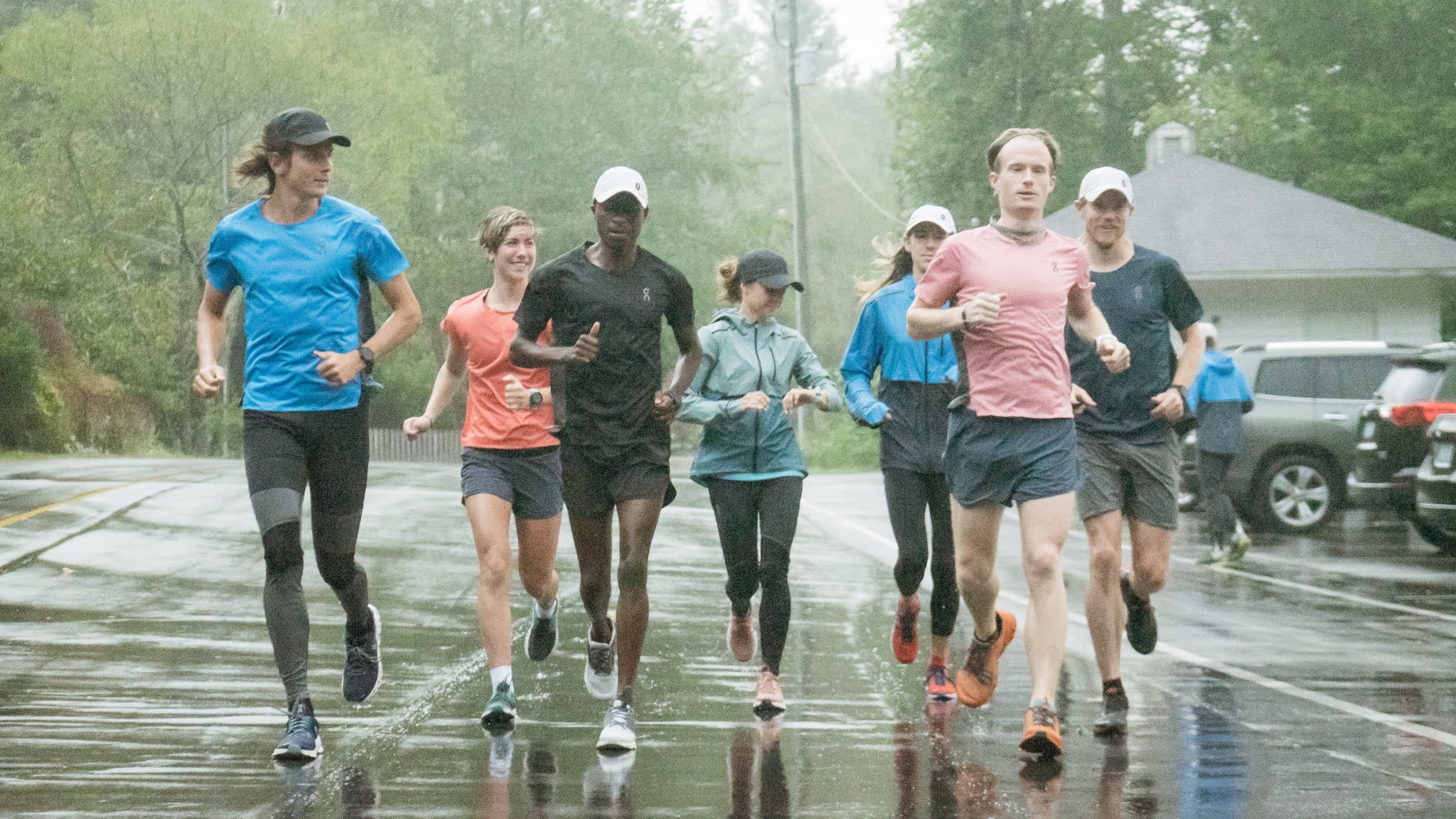
It's not goodbye, just see you later

I'll get the announcement out of the way early: I'm moving to New York City with Joanna!

Fittingly, I'm starting a new life chapter in the same city where the special moment I consider to have opened this past life chapter took place:

In the Fall of 2011, anemia nearly cut the legs out from under my senior cross country season at Princeton. But a ferritin test late in the game prompted me to start taking iron supplements, something I'd never done. Within two weeks, workouts began indicating that something positive was happening with my fitness: I wasn't struggling to hit fast paces anymore. Unfortunately it was too late. I wasn't named to travel with the team to the NCAA championships in Terre Haute; I simply hadn't proven to the coaches I was ready in time. But there was a consolation: the IC4A cross country championships held the same week in Van Cordtland Park, the Bronx. Many northeastern teams that didn't make the national meet as well as the "B" squads from schools that do make NCAA's compete at IC4A's.

Do you know what it feels like to finally have your hard work pay off at the eleventh hour, when it was beginning to look totally futile? I'd spent the summer of 2011 running month's worth of 100+ mile weeks at altitude in Park City, UT, chasing my team mates on tempo and long runs, lungs burning for what I only now know was anemia. I was over trained, and when the season began the results showed it. 25:53 and 26:01 8k performances, about two minutes slower than what I'd run a year earlier. I wasn't even close to making the 12-man Heptagonal (Ivy League) conference team, a hard pill to swallow for a senior.

But the summer training in Utah didn't go away. My blood iron levels on the rise, I was less handicapped. We showed up to IC4A's in New York, and I led Princeton's junior varsity squad to an individual and team win. I ran 24:49 for 8k, not bad on the hills of VCP, with fellow Tigers in a tight group not far behind. Celebrating our win with my team mates after, I felt that a switch had just flipped. I had turned a corner. 

On that day I started becoming the runner who would break four minutes in the mile, set school records at Princeton and Texas, and go on to run professionally. On that day, running grabbed hold of me tightly, and it led me all the way through my twenties to now.

Since then, I've spent the better part of decade in pursuit of a simple but evasive quarry: running faster. Living and breathing running at ZAP, sacrificing a "normal" life in the North Carolina Blue Ridge Mountains. Two things from this place are going to leave an everlasting impression on me: the physical landscape and the people.


The view was different every day I lived here

Here it is rhododendron forest, ancient gray rock heaving at crazy angles out of ridge tops, and mountains that fold and fold to the horizon. If you're running, you're inevitably next to a creek or river, and the steeper the road or trail you're on, the smaller and younger the water. The topography funnels us around here, controls where we go, and sculpts us physically and mentally. I've been profoundly inspired by these ancient mountains.

The people: the team mates and coaches at ZAP who each left their own unique impression on me. A group of runners is a like a cast of cartoon characters: each with strengths and weaknesses that are amplified and caricatured by the demands of our sport. I could write a book about each one of them. Few work-life situations could have developed in me the type of empathy, patience, and love for others that ZAP has.

The people.
The people.

Having lived in the North Carolina mountains for seven years, Manhattan is going to be quite a lifestyle change. But none of my running goals are modified. I'll still be affiliated with ZAP and On Running, training for next year's Olympic track trials in Eugene, and looking forward to a career in the marathon. In moving to the city and working a job in engineering (hire me!), I'm taking a leap that will force me to radically alter what daily training looks like, and more importantly, provide distraction from running. Which, believe it or not, is a good thing.

I never could quite sit still at ZAP. Pro running is about spending a few hours working really hard, and then chilling for the other 21 hours of the day. The best athletes can turn their brains off and let stress-free recovery take place. I always wanted to be producing: building something, starting a company, climbing a mountain. I alternately fought against and accepted relaxation throughout my entire seven year career at ZAP. I'd tend to categorize activities as either worth my time or a waste of my time, which can become unhealthy. Sometimes your best memories with friends or your clearest ideas come when your time isn't structured.

In New York, I hope to appreciate my free moments more. To make running a release.

I've given full-time running a really good shot. I competed with success at everything from the 1500 to the marathon, lived and trained with 21 other team mates and friends over the years at ZAP, and competed all over the country and world. It was a hell of a good time. 

But the thing is, the hard work has not yet paid off.

Here's to knocking it loose at the moment it's really beginning to look futile.
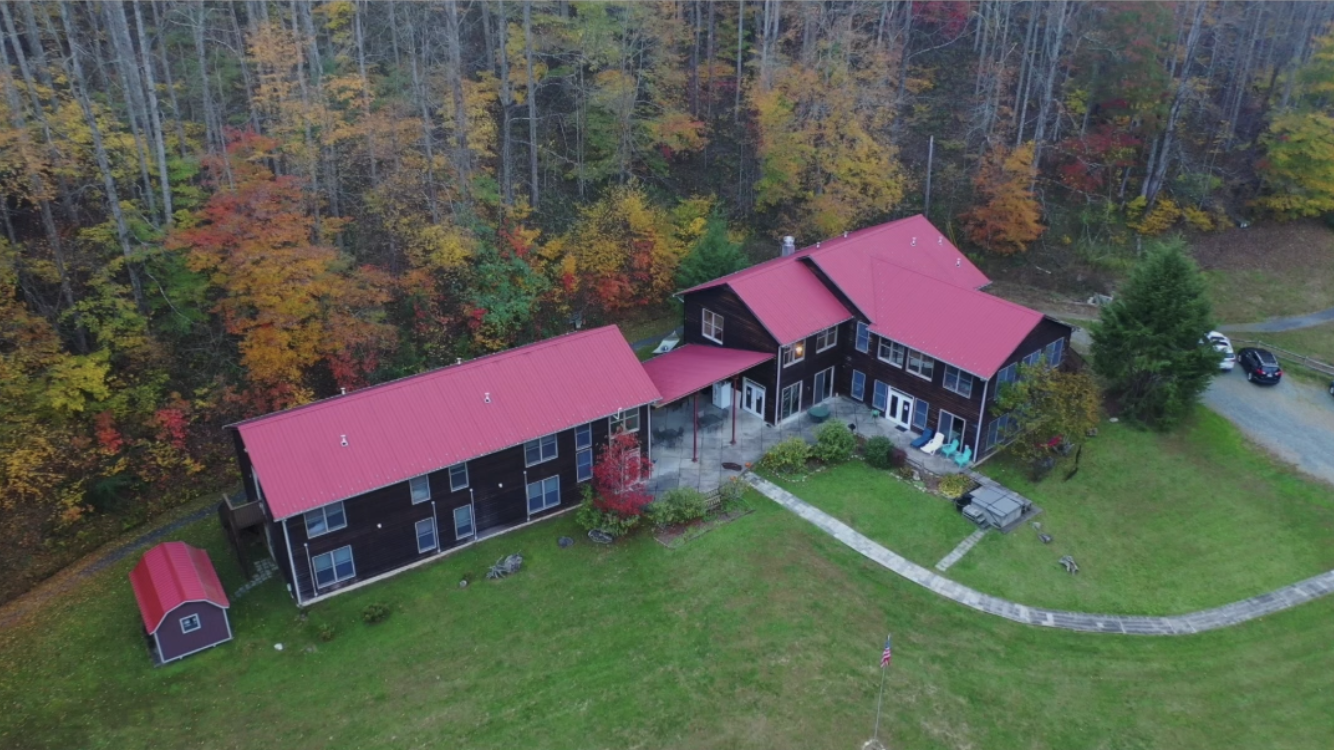
Really going to miss this place.

- - - - - - - - - - - - -

Little update on training & racing amidst the pandemic: We somehow managed to sneak two real races in this summer - the WISCO Mile in Milwaukee, where I ran 4:06, and the Music City Distance Carnival in Nashville last weekend, where I ran 13:45 for 5k. Both did a good job with COVID precautions, especially MCDC, which required two negative tests the week of the meet. There is a possibility of competing in a 10,000m next weekend in LA, depending on city health department permissions. 

Joanna and I are carrying out our mandatory 14 day quarantine in NYC, having traveled from North Carolina. We bought a cheap treadmill to train on while we're holed up in the apartment, so that's going to be a lot of fun. In all seriousness, I believe it's possible to maintain a high level of training AND good levels of virus precaution. You just have to be willing to do a little extra work and be a little uncomfortable at times. That goes for whatever your passion is: find a way to adapt.

Thanks for reading.

MCDC 5,000m in Nashville 8/15/2020

Sunday, September 17, 2017

Moving On Up

A few hours after the Ed Murphey Mile in Memphis, Tennessee I shifted balance on the wall I was perched on outside a bar filled to capacity. My track season had just ended. As I craned my neck to see inside through big glass windows, huge versions of Floyd Mayweather and Connor McGregor danced, projected onto the bar wall during round eight of their much anticipated fight. Out there in the Memphis night there was barely room to get an unobstructed view of a TV inside.

Earlier in the evening, eight of us took up our own stage on a high school track on the outskirts of Memphis.  Standing on the makeshift mile start line, thousands of fans clamored at our periphery in the outside lanes and the infield. We felt something like Mayweather and McGregor must have felt in the ring. All athletes do. Knowing that was pain was about to come. Feeling the proximity of human bodies, leaning in, anticipation palpable in eyes.

Just eight men and seven women comprised the mile/1500m fields in Memphis, including pacers. Crowded, physical races are part of running, but this very small field was refreshing after a spring and summer of jockeying for position in US, Irish, and Belgian track races. Minutes before our race, the women put on a great 1500 meter show, and the crowd was still buzzing. The entire track was lined with people. 

Their roar abruptly crescendoed at the start as if torn from the starter's gun, its wave rippling around the oval, preceding and following us as we covered four laps for the mile. I never remember much detail from a race, but I do recall hearing "USA! USA! USA!" on each run of the backstretch. The pace was good and fast early as we passed 800m in one minute and fifty six seconds. 

Pacer Jesse Garn (a great guy) takes us through three laps in the inaugural Ed Murphey Mile in Memphis, TN.

You never truly settle in a mile. It's too short a race, and even the smallest gap to the guy or girl ahead can lose you the race. You enter into a state of strained relaxation at the intersection of conscious thought and subconscious action. The world collapses down into a few blurry objects seen through a pinhole, the wind in your ears, and the notion of how much you have left in your legs versus how far it is to the finish.

With six hundred meters to go I was in second place behind Craig Engels, one of those young guns right out of college. He had just cut his magic mullet off a few weeks earlier, so I thought maybe my old man strength could prevail over him. We were cutting the fastest pace I'd personally been on for a mile or 1500 in the past several seasons, so the letters P and R started floating around in my head on the second bend of the third lap.

But seconds later, coming around into the bell lap, Craig, in the lead, slowed down considerably. It was then that I made the mistake of not maintaining our roll and going around him. Instead, Eric Avila shot out of third past us into the lead. By then there were 400 meters left, I was in third place, and the kick was on.

It is here that we come to the point of, or at least part of the thrust behind, this blog you are reading.

Sticking to a strategy that isn't paying off, but still has a chance to, can be scary. In most endeavors, (except for like, trying to hit a piñata blindfolded)  you'll never find success unless you pursue a given strategy for a long, long, (long) time, wringing it of its potential. We have a word for that: committing. Running is one of those endeavors (you should still commit to the piñata because there's candy in it.)

After finding success in them, I've been committed to running shorter distance races (1500m, mile, 5,000m) since college, and I've been consistent. But pretty much just that: consistent. Running up to and just barely kissing personal bests each year, racking up many 5k performances in the thirteen-thirties and miles with one or two seconds of four minutes. Good performances, but not ones in line with my desire to continue improving.

So imagine my mingled dismay and disbelief when, after that last lap in Memphis, after cushioning ourselves by a full four seconds below four minute mile and P.R. pace through halfway, and seeing the door open to the lead heading into the bell, I finished fourth and the clock read 4:00.3 next to my name in the end. We’d slowed down too much on the third lap and it cost us. Btw, I had ran 4:00.7 three weeks earlier in Raleigh. I told you I was consistent.

(I'm not asking for your phalanges to ply the world's smallest fiddle for me here. Everyone's running career is a big series of experiments, and results are results, especially when they're less than "stellar". [Let me also say that disappointment very quickly gave way to joy at being part of such a great event in Memphis. The top three got under four, so it was a historic race. Having barely finished, I turned around and jogged down the line of spectators for a round of high fives.  My legs experienced a second round of numbing lactic buildup even at ten minute pace {how the hell do people do victory laps or post-race dances <Ezekiel Kemboi> looking so good?!}, but my spirit was quickly repaired. That's the beauty of events that get the fans close, physically, to the athletes. Like Memphis, Sir Walter Miler in Raleigh, the Long Island Mile, and others have been popping up. Like boxing. {In fact I started writing so much on the topic of making running more popular through format and presentation that I had to fork it over to a  separate, forthcoming blog. Stay tuned.}])

Getting fans close to athletes is the future of this sport. Sir Walter Miler in Raleigh, NC.

Memphis ended as somewhat of a paraphrase of my entire season: healthy, running pretty fast, but performing time and time again on the same plane. Our strength coach at Texas once told us that the definition of insanity is trying the same thing over and over again and expecting different results. That’s not really what it says in the dictionary, but I’ve been feeling a bit insane in that sense lately. 

So it’s finally time to try a new strategy. I’m selling my car and moving to Saskatchewan!

Just kidding. I’m not going anywhere. Luckily running offers more than one surface to gallop upon, and plenty of distances to gallop over.  It's time for me to move up in distance. 

No, not to the marathon. Yet. I’m not ready to relinquish all my fast twitch muscle fibers. Just half of them. I’ll be running the Houston Half Marathon in January. Race weekend in Houston will likely have a healing and inspiring effect on the city after Hurricane Harvey, and I’m excited to run and be part of the race. The remainder of 2018 will include more racing on the roads than on the track, although I’ll run a track 10,000m or two in the spring, and will probably hate myself afterwards.

Training will change, too. I’ve never trained like a true miler, but in parallel with the shorter distances I’ve targeted in the past few years, things like volume (mileage over time) and intensity of workouts have always been closer to a shorter, faster, trackier motif while at Princeton, Texas, and Zap Fitness. That’s going to change.

Basically my running pedigree boils down to a battle between my mom and dad’s sides of the family. Dad, with his shorter, stockier stature lends speed and power (and my big butt) to the equation. But then mom comes in and lets me run really far, with her thin, tall dad and willowy ancestors. I’ve been giving them both a chance up until now by focusing on the classic speed/distance combo that is the 5,000m event.  So sorry, dad. Time to give mom and the longer, strength oriented side some more love with things like triple digit mile weeks, longer threshold workouts and tempo runs, and farther long runs.

Squad. Andrew, Aaron, Brandon, and I line up for the Morton Games 5,000m in Dublin this summer.

Absolutely the most important thing for a runner (or anyone, with any passion) is to be excited about running and to keep having fun doing it. When you’ve reached a stale point or a bit of a plateau/mesa type thing, it’s time to make a change. Running in a few new events and getting a novel race calendar is exciting. Even more so is the renewed prospect of finding my true strength and reigniting my belief that I can make a world championship or olympic team. With new goals and a plan to reach them, it feels as if I’ve retired from one job and taken up a new one, where the water cooler is twice as far away, I work late on weekends, and have a brand new stapler.

I took a two week active break after the Memphis Ed Murphey Mile, and am now in the second week of building up mileage. My first race back actually makes this whole blog look like a lie, since it’s a 5k - the USATF Championship / Dash to the Finish Line race in New York City. Last time I ran that race, in 2013, I first met and shared a hotel room with the late runner David Torrence, who tragically died last month at way too young an age. It being one of my first races on the pro circuit, DT made an impression on me. He was eager to hand down seasoned wisdom on training and traveling and racing to a young pro just getting started (though he kept the room way too cold). I was always very impressed with his racing savvy and ability to run everything from the 800m to the 5,000m and beyond at a super high level, and his ability to pump up crowds and make people love him. He will be missed.

After New York it’s a few more road races in November and the Club Cross Country Championships in December. The fall/winter cycle builds to the Houston half marathon in January, after which we’ll start looking at that 25 lap track race and road races around the country.

For those of you who’ve somehow managed to read all the way to here, I reward you with an update on the Zap Fitness vegetable garden. This year has seen by far our most abundant harvest. The tomatoes did decently, though many get caterpillarized if you don’t pick them soon enough. Our real windfall was in jalapeños. They are the spiciest, tastiest ‘peños I’ve ever indulged in. Going in and coming out. And we have more basil than we know what to do with. Make a lot of pesto I guess.

That's it for now. Thanks for reading.

Upcoming race schedule:
DateRace NameLocationVenue / Distance
November 4US 5k Road Champs/Abbott Dash to the FinishNew York, NYRoad 5k
November 11VCU Health 8kRichmond, VARoad 8K
November 23Manchester Road RaceManchester, CTRoad 4.748 miles
December 9Club Cross Country ChampionshipsLexington, KYCross country 10k
January 14Aramco Houston Half MarathonHouston, TXHalf Marathon

Wednesday, January 25, 2017

Fenestration

Afraid to swing my legs off the bed and put my feet on the floor, I stared at the blankness of my bedroom walls.  When I was younger, this would have been because I was afraid some raptor clawed monster with long, snatching arms waited beneath the bed, ready to drag me to its lair in the basement.  Or if at home in Milwaukee during the winter, because the hardwood floor of my bedroom tended to match the outside's midwest temperatures, ready to freeze bare feet.  Now I stared at the paintings on my bedroom walls.  Checked my heart rate.  The morning light made reflections in the altitude tent plastic, little faces that distorted and chuckled in the breeze coming from the window.

I was delaying the beginning of the day because I felt a sharp ache in my upper outside ankle.  I didn't want to put weight on it and confirm my worst fears: another bone injury.  I was being dramatic.  A year ago Id’ve chalked this kind of pain up to just another demon sorely haunting my flesh, tendons, and bones.  One of the countless reliably exorcised during the first cracking, tendon popping shuffle to the bathroom, or if stubborn, during the first few running steps of the day. 

As it turns out, I got up, went to practice, ran, and have kept on running since.  The ankle thingy was just that: a thing.  But my hesitancy shows one thing: getting hurt last September has certainly made me keenly aware of my vincibility.  I think that’s a word.


Having neglected to write for so long I feel obliged to rewind (still a word I think) to September twentieth.  I had just posted a blog piece that mentioned how taking a longer break from running had left me refreshed and healthy.  I was about to be proven (mostly) wrong.  The very next morning, on a hard hill workout with (ya done messed up) Aaron at Bass Lake, hubris struck swiftly and sans mercy.  Somewhere in my pelvis, some of the strongest ligaments in the body pulled hard enough on my sacrum, a bone between the pelvic wings, to fracture it.  I knew immediately during the workout that something was wrong.  Donald Trump was way too close in the polls.  And my back really hurt.  Luckily I only ran about an extra mile on the injury, hoping it was just freak pain, before I stopped.

Several days later, an MRI confirmed what we were already almost certain of: a sacral stress fracture.  Pete’s recovery protocol called for a full eight weeks totally away from running. Unlike other types of fractures, virtually every cross training modality, including biking, elliptical, swimming, pool running, walking, and even helping to construct a scale replica of the Great Pyramids of Giza by hand end up irritating a sacrum fracture.  Exercise was out.  I was now wanted by the Sacral Police around the Zap Fitness campus.  Five-stars-on-GTA wanted.  If I was caught so much as dancing I’d receive a stern reprimand from team mates. Eight weeks of electrifying ossification it was.


Wanted by the sacral police in Boston

As it turns out, running problems aren’t much different from living in Egypt under Pharaoh and the Ten Plagues.  Pee transforming into blood.  Lyme disease.  Shards of glass impaling the foot.  Food poisoning from diseased livestock.  Disintegrating bones.  I’ve seen friends and team mates with it all over the years.

Stress fractures are about as common as Starbucks locations will be on the moon in 2050. Most athletes on the professional circuit have suffered at least one bone fracture or reaction in their career.  Many ridiculously accomplished athletes seem to exist in a perpetual state of duct taped-ness, cross training from one window slit of health to the next, yet still pulling off amazing performances in times of relative health despite their apparent fragility.  

Having been healthy for so long, part of me felt I had it coming; that every lucky streak comes to an end.  This notion made being hurt a little easier to swallow.  I was finally about to experience the other side of competitive runner life coin for the first time: video games.  I mean…  being debilitatingly injured.  Actually I just watched team mates play video games. I’m more of an observer.  Seriously though: a runner should always do everything in her or his power to avoid getting hurt, but when she does, he should remember that being hurt is part of the process.  Injury is a cost of doing business.

And I’m finally a member of the Bones Brigade.  I know their secrets.

Rule number one: You don’t talk about the… 
You believe you’re going to come back stronger than before.  Not in an abstract, cliche way, either.  You believe you’re going to have your best season ever, right after being in the worst shape of your life, or at least since your middle school skateboarding years.  As in, you’re going to win stuff you’ve never won before and run personal bests you’ve never run before. Which is the definition of a personal best.  This helps get you through the days when the altitude tent faces start to look like that clown from It, or worse, James Franco.

I didn’t delight in not engaging in the activity I enjoy the most for two months.  I had too much time to think.  I started writing a novel about a coach that mentors athletes for years, only to sadistically murder them and stuff their corpses in a collapsed mineshaft.  I envisioned a toaster that prints the weather forecast, motivational phrases, and market futures on your toast.  (already been done)  I did quite a bit of sifting through thoughts, most of which fall under the “holy shit I’m getting old where did the time go and what am I doing with my life” theme.

I’m proud to report I came out on the other side.  No.  I didn’t quite experience the sunlit burst of mach-nine-jet-fighter-flying-out-of-a-masisve-kerosene-explosion type inspiration that some people claim they get after overcoming injury.  I know success won’t be automatic. It’ll have to be worked for over time.  It’s a long trail back to peak lifetime fitness.  That’s the realist in me.  What I am feeling, now healthy, with three workouts under my belt and running mid-seventies miles per week, on the way up, is a sense of reset and swift progress away from the bottom.  

I returned to running Thanksgiving week with a blissful nine minute jaunt on the alter-gravity treadmill at 70 percent body weight.  We did several weeks worth of short alter-G runs alternating with swim days.  By mid December most runs were on land with all 9.81 meters per second squared of sweet gravity pulling my aching limbs that forgot how to run down towards the center of the Earth.

The first hard workout back was here in Tallahassee.  Brandon and Matt dragged my mouth breathing self around four times two kilometer repetitions on grass soccer fields.  The 800 meter loop that Pete measured and marked out would have made lovers of quicksand and many sided polygons proud.  I didn’t care how much energy the angel food cake-like ground soaked up from our strides.  I was just glad to be back rolling after so much lying around doing crosswords.


Matt, Brandon, and I running a hill cycle workout in Tallahassee earlier this month.

Admittedly, there were moments during time off and the early phase of starting again when I was mildly depressed.  Doubtful that I’d be able to climb back to competitive fitness.  I didn’t feel like a runner, which, despite trying to stay diversified in my interests, is a huge part of my identity.  While not running in September, October, and November, the next most exciting aspects of life began creeping into my thoughts.  What am I going to do after professional running?  I want to engineer and invent.  My dream is to be an entrepreneur. With nothing else to do, I began doing research, sketching ideas, calling people.  Which is great, except for one thing: I’m not done committing myself fully to running yet.  Post-running life was making a house call while running was away.  The desire to do something frankly stressed me out, because I was, and still am, around Zap, a running environment (except for the occasional drag race and pistol duel).  

In the end I learned from this injury something I already knew, but had to be reminded of: to just relax and live the life I’m living currently.  That’s easier to write now, when I’m grabbing fitness left, right, port, and starboard and beginning to see the light.  When you’re going through a tough time, believe that your wayward anchor, when it’s given back to you, will serve its purpose and make you happy again.  I forgot for a time how great working towards hefty goals, finishing a hard workout, and sharing a swift run with friends makes me feel.  Natural.  Purposeful. 

Maybe I just came to the exact same conclusion that many before me already have.  But everyone has to wade through the same experiences, bound by shallows and miseries at times.  Would life be any fun if you were born with the wisdom of humanity come before you?  Probably not.  I always preferred the Do It Yourself (w/ your contemporaries) section.

One day I was staring out of my window at a tree high up on the ridge opposite our house.  It towered above all the rest against the sky.  The wind had gradually bent its limbs until they permanently embraced the trunk’s leeward side.  I was trying to determine from my window whether the tree was an evergreen or a deciduous tree, but at that distance I couldn’t be sure.  I resolved to take a steep hike up to find out.  But then I got hurt and couldn’t walk.

Six weeks later in November when the valley was awash in fiery yellows and reds, I looked out the window and my tree stood out, clearly ever green, high on the ridge.  Sometimes you just have to wait.

Team field trip to St. Mark's Wildlife Refuge and alligator alley.  Matt was so scared he kept his eyes closed the whole time.

Zap Fitness is in hard training at Tallahassee training camp until mid February.  Then we’ll retreat back into the mountains and enjoy Chef Michael (co-author of a forthcoming Zap Fitness cookbook + workout book!) food once again.

Having started training so late following the injury, my agenda for 2017 is a long track and road racing season extending all the way into October.  The first time I put the uniform on will be to pace 5,000m and mile heats at the Iowa State Classic indoor meet in a few weeks. My first real race will be the Gate River Run / US 15k Championship in March.  That one will be successful if I avoid a post-race thermometer up the butt like two years ago.  TMI?

Thanks for reading all the way to the end, gentle reader.  To reward you, I leave you with this: flamingoes are pink because they eat shrimp.


Here's my tentative race schedule:


DateRace NameLocationVenue / Distance
February 11Iowa State ClassicAmes, IAIndoor track pacing duties
March 11Gate River RunJacksonville, FLRoad 15k
March 24Raleigh RelaysRaleigh, NCTrack 1500, 5000 pace
April 15Boston Athletic Assoc. 5kBoston, MARoad 5k
May 3Payton Jordan InvitePalo Alto, CATrack 5k

Friday, April 29, 2016

Arrest Yourself

"They are human, like me.  Why should they be any better than me?  We have the same color blood."
       - Mark Wendot Yatich

Up here the wind sluices steadily down through the valley, crashing against thousands of trees loaning millions of branches to a symphony imitating the sound of surf and beach far to the east and below.  As if nature's ultimate tone is everywhere a powerful thrum, the wind sawing against forest and sea with the same taught bow.

We trot down amongst rhododendron on sparkling mica dust trails to a lake that reflects scurrying clouds, swirling haven while above the pine tops lean slowly back, give, and oscillate murmuring against the gust.  At an overlook the mountains fold and scrunch in rows endlessly towards Tennessee and Virginia, each face a hue of blue-green assigned daily.  Cataloochee is the Cherokee word for their arrangement.

The olympic trials begin in just nine weeks.  Its tractor beam has the hearts and minds of every American track and field athlete with olympic aspirations in its grip, the supply of time for adjustments and gaining fitness quickly fading.  Some have the advantage of having made the team before, but many will leave Eugene first time olympians who had to have total belief in themselves when they stepped to the line.  In some cases unwarranted, against-the-odds belief.  Owning such belief, especially if training or results haven't yet added up, takes more than simply banging your head against the wall, willing it to exist.

“Rest is the conversation between what we love to do and how we love to be… To rest is to give up on the already exhausted will as the prime motivator of endeavor, with its endless outward need to reward itself through established goals. To rest is to give up on worrying and fretting and the sense that there is something wrong with the world unless we are there to put it right.”
       - David Whyte*

The non-physical component of rest, at times neglected by athletes (including myself) and all kinds of people facing any challenge or job, deserves some attention.  Many runners understand and get recovery training, sleeping, napping, staying off their feet, and therapy right, but they stop there, or rather embark on other projects.

Focused rest is described in that last line of Whyte's - not worrying whether you should be doing something else.  In that peace and quiet, the ability of the mind to control the body gets stronger.  When you rest without distraction, you’re preparing to compete without distraction.

Everyone has the will to prepare and the will to win, but will is exhaustible.  It gets damaged when things go wrong.  It takes energy.  You can want to run a fast time or achieve a goal really badly, but when that painful moment of decision comes in a race, your body doesn’t care what you want.  On the precipice of breaking, above your inner voice frantically yelling “mush!”, the body instead hears something we have less explicit control over: the Subconscious.

In Lewis Thomas' Late Night Thoughts on Listening to Mahler's Ninth Symphony he describes "one of the great mystifications of science: warts can be ordered off the skin by hypnotic suggestion."  Skeptical, I looked further into this example of the Subconscious playing a wieldy role in the mind-body dynamic.  There have been cases involving years-old warts targeted amongst groups of warts that when ordered to disappear obey within two weeks, and studies that hypnotized all the warts of one half of the body as desired.

In Thomas' words, "This is not the sort of confused, disordered process you'd expect at the hands of the kind of Subconscious you read about in books... Whatever, or whoever, is responsible for this has the accuracy and precision of a surgeon."

When the mind rests the Subconscious is fed.  Hypnosis is the catalyst in the wart example.  I’m not suggesting we start putting ourselves in trances, but wart surgeon or not, the Subconscious’ power to influence the body is incredibly more powerful than the Conscious'.   Estimates put "conscious processing power" at a mere 3% of the total compared to 97% handled subconsciously or autonomically†. I think it’s possible to orient the Subconscious in the direction of the will when we rest, and call upon it when the will weakens, for example during a race.

When you train, your body breaks down and adapts to the stress you put it through.  Meanwhile you shape a portion of the Subconscious related to pain and discomfort by continuously willing forward a body that wants to stop.  In time, instinct is honed.  You learn to relax at paces on the edge of your ability.  Crucially, when you compete, you hardly have to think.  Pacing off competitors, making strategic passes, and shifting through levels of effort becomes automatic.  The best races and workouts feel effortless because something deeper is taking over.

Getting “up” for a race.  Worrying whether you’re going to give it your all.  Questioning your motivation.  All of it comes from a fear that your body won’t respond to your will.  The workaround is training your Subconscious with rest.  Reflect on the workout you did that day, not worrying about whether other tasks need tending to.

Be ok with periods of boredom.  Get away from the phone and feeling like you constantly need to be producing something.  Meditate.  Do what you love to do by being how you love to be: relaxed, focused, and not worried.  As always, this stuff applies to more than just running and sports.  Any time forces are against your will, resting could help beat them.

Stretching on the side of the lake after the run with spring growing around me, I remember how grateful I am for the opportunity to do this.  Things are simpler when you just let them happen.

 - - - - - - - -

George, Johnny, Joanna, and I travel this weekend to Palo Alto for the Payton Jordan Invite at Stanford, where many of the fastest American performances are run year to year.  Not counting rabbiting the 5000m a few weeks ago at Raleigh Relays, the 5000m on Sunday night will be my outdoor season opener.  We’re looking to grab Olympic (13:25) and trials (13:28) standards out there.

In memory of our late team mate and friend Cameron Bean,
the Bean House is nearing completion up the driveway from Zap.

Things are great at Zap. The stream keeps trickling and the birds wake me up every morning. Now that Sinead, Joanna, and Nicole have joined the team, Andrew won’t be able to mow the Zap field naked anymore.  Chef Michael Ryan returns for the summer season on Monday and we're looking forward to his tasty meals, especially the beets. The new Cameron Bean house, which will house some of our athletes, is nearing completion and complements the eight month old Andy Palmer house just up the hill. We're looking forward to a busy running camp season full of new campers and  returners in the Zap family.

Thanks for reading.


Race schedule for the next few weeks: (June races TBA)

DateRace NameLocationVenue / Distance
May 1Payton Jordan InvitePalo Alto, CATrack 5000m
May 12US 1 Mile Road ChampionshipsMinneapolis, MNRoad Mile
May 20Hoka One One MD ClassicLos Angeles, CATBA
July 1-102016 Olympic TrialsEugene, ORTrack 5000m

*Whyte's short essay on rest is a great read
† Good blog on using the Subconscious by Catherine Collautt, PH.D.

Wednesday, November 25, 2015

9555 Blackberry

Sunday evening I went for a walk.  In the running world Zap Fitness coach Pete Rea's style falls on the eclectic side, and one of his slightly quirky training tidbits is prescribed Sunday evening walks following the morning long run for the week.  They're meant to knock loose some of the inflammation in our legs.

The Zap campus sits at the bottom of a valley in the Appalachian Mountains.  Blackberry Road dips down into our little hollow complete with a creek that rushes by and a mile section of dirt road that somehow never got paved.  Just up the hill from the long Zap driveway the construction site of a new house is already daily bustling with activity as a new athlete lodging rises from its foundation.  It replaces an old white house that just months ago was my home.  The white house held a lot of Zap history but needed to be torn down.

Darkness falls earlier now and as I come upon the equipment and mounds of dirt left by the contractors, I try to find remnants of our old house.  There isn't much.  But on the edge of the site where a chain link fence was bent into a tangled mess by the bulldozer are a set of busted-up wicker chairs.  And a dirt stained bed sheet.  It was Cameron.  He used to love getting people together around the fire in our backyard and projecting movies onto the sheet against the fence.  That stuff sat out in the weather all summer long since the last showing.  I'd look at it from my bedroom window and think, "I better bring those chairs in from the rain and get that sheet."

I imagine where the old house was, my room floating in the air and Cameron's below it, his cat Nala chasing birds around in the yard.  Cameron died two months ago after being hit by a car while running in his hometown of Chatoanooga, TN.  The magnitude of support from the local and running community is testament to how many people were influenced by his huge personality.  His dreams were not abruptly and totally ended that day.  They live on through us at Zap and everyone who takes on the challenges and strives to live the way Cameron did.  Cameron is cheering us on now, and I can feel a certain determination and electricity in the Zap team as we approach the Olympic year (Thanks in no small part to the occasional Drake and house music we play in his honor while lifting).

Cameron and I on the last night I saw him.  Wouldn't have wanted
it any other way.
-  -  -  -  -  -  -

The Olympic Year focus has had a strong effect this fall and early winter.  We've tweaked autumn training compared to the past two years, and it's already had good physical and psychological effects. 

Friday is now #FastFriday.  On Fridays we typically run 50-55 minutes in Moses Cone National Park before putting racing flats on and doing two to three kilometers worth of fast, uphill running.  It's not a lot of volume, and I wouldn't label it a full workout, but economy on hills helps with proprioception and activation of prime mover muscles (ok, now I'm using language that only Pete Rea understands).  This is nothing new - almost every serious runner does hills - but we've never made it this much of a focus this early in the buildup into the new year before.

Lifting.  Core, stability, and plyometrics have been in my training plan since high school.  The focus has gradually shifted from traditional core "abs" in college towards stability in the hips and pelvis at Zap.  Now we've added real, actual lifting with real, actual bar and plates twice a week, doing weighted squats and weighted step ups onto a box.  We save the core and stability for four other days during the week and take a break from the weight room on Sunday.

Diet.  I've always had what the average American would call a healthy diet, but as a bigger runner, I have to pay a little more attention to what, how much, and when I eat.  "The flame burns hot" mentality does not cut it for me.  I eat often during the day and in small amounts, eating just enough to stave off hunger until the next small snack.  Carbs generally go in early and protein more in the PM.  I have a medium-sized snack 45 minutes to an hour before dinner to keep my eyes small.  Tuna is my best friend.  I'm not gluten free, but I tend to avoid it with some wiggle room.  (Like if I go to my girlfriend's parent's house and we're having lasagna, I eat it.)  Figuring out how to stay lean while training hard and not getting hurt sustainably has taken me years, and I'm continually testing new strategies and foods.  What I have found for sure is a strong motivation to stick to the plan this fall.

The Manchester Road Race is tomorrow morning.  It's my first race in over two months and the beginning of the road to the Olympic Trials in July.  The course is 4.748 miles long and has a large hill in the second mile that will test what we've been working on a little bit.  Can't wait to feel some burn and taste some bile.  I'll be running for Cameron.

Happy Thanksgiving everybody.  I think Black Friday started already too.

Tuesday, July 14, 2015

Cork and Kortrijk, Fundamental Particles

These word travel in a battalion of binary, tinily constituent of a surging light pulse torrent hastening at the universal speed limit within a three inch diameter fibre optic cable on the bottom of the Atlantic.  Outside this intercontinental information superhighway lies absolute inky blackness, vertical miles of ocean hammering down in mute pressure.  At one point the cable passes a group of thermophilic deep sea organisms huddled around a volcanic vent for sulphur and heat.  We share some DNA with them.

Belgium was warm when we got in on the third of July.  That Saturday, Leuven set an all-time temperature record of 35, convert that, 95 degrees fahrenheit.  The bell tower near us played the Star Spangled Banner in the afternoon. #America.  Our apartment at the summit of its very steep and narrow staircase stuffed between buildings doesn't have air conditioning.  So it goes.

Ireland on Sunday was much cooler.  During the bus ride west from Dublin I was surprised to see large rolling hills and occasional stands of coniferous trees lining the highway.  Southwest Ireland was beautifully cast in late evening light filtering through clouds as we rolled into Cork, a harbor city.  The athletes competing in the Cork City Sports meet were put in student housing near the track a couple miles out of town.  There was one very weak wifi network set up for an army of twenty-somethings far from home.  We looked like thermophiles around a volcanic vent.

The 3k in Cork in front of race winner Brett Robinson
I think I enjoyed all the potatoes and sausage (bangers and mash) more than most.  The Irish are very hospitable and easy to strike up conversations with.  Most Irish will say they can't even understand the accent of the Cork Irish, and I could hear why.  The (friendly?) rivalry between Corkers and Dubliners extends to their respective local beers.  Drinking Cork's Murphys Irish Stout and Dublin's Guinness back-to-back, I'd have to say Guinness still takes the blood pudding.

Despite windy and chilly conditions for the meet, the 3000 went a relatively quick 3:08 for the first three paced laps.  I put myself immediately behind the rabbit and when he dropped off American Jon Peterson generously took over the lead.  We slacked a bit on laps four and five and I let my eyes off the front of the race momentarily which cost me.  Australian Brett Robinson and Jeff See plucked a lead ahead of the pack.  With 200 meters to go I was moving really well and passing Dave McNeil, another Aussie while the announcer billed it as an Australia versus America finish.  I was third in 7:54, a good start to the five race tour in Europe.

By mid-week the drove of American professional runners had settled in after their annual migration to Leuven, Belgium.  Like Canada Geese we are here for the climate, we fly in V-formations on runs, eat a lot, and generally piss off the locals.  Leuven is an out-of-the-way small town with everything Canada Geese need: a track to shit on (metaphorically), lots of awesome green space for our activity, and the by now famous waffle stand.

On Saturday seemingly everyone ran the 1500 in Kortrijk, a small town on the Belgium - France border.  Courtrai (the french name) has been nice Nice to me in the past: it's given me a 3k PB  before and nearly a 1500 PB last year.  This time the fields were large and loaded, perhaps to the detriment of the races.  I didn't get out quite hard enough over the first 100 meters, even though it was probably 13.xx, was far back in the pack, and had to make at least three huge moves, each on the backstretch of every lap, until I gained a spot in third with 200m to go right behind Lopez Lomong.  The moves cost me a strong kick to 3:42, a subpar time but decent considering the whipsaw pace.

George and I got in a little fartlek and 400s tuneup session this morning in light mist.  Both of us feel great coming into Saturday's KBC Nacht meet in Heusden, where we're both running the 5k along with Leuven apartment room mates Brian Shrader and Maverick Darling and several other US runners.  The Olympic qualifying window is open and a fast time is the target.

For now thanks for reading and I'll post an update after the next couple meets.  Here is my upcoming race schedule:
Date Race Name Location Venue / Distance
July 18 KBC Nacht Heusden, Belgium Track 5000
July 24 Morton Games Morton, Ireland Track 3000
August 1 Flanders Cup Ninove Ninove, Belgium Track 5000
August 7 Sir Walter Miler Raleigh, NC Track Mile


Thursday, July 2, 2015

A Contest for Speed in Running

First of all they held a contest for speed in running.  
The field strung out from the starting scratch, yet all at the same time
flew on together, turning up the dust of the plain.  Of these
stately Klytoneos was far the best in the running,
and was out in front by the length of a furrow for mules plowing
a field, and came back first to the crowd, with the rest behind him.
  - Homer, The Odyssey Book VIII 120-25

For forty meters my legs rode a wavelet of power; a small but resonant surge prevailing stubbornly against the spring tide of choppily rising blood PH levels.  In the video of the race you see me get passed with 220 meters left but briefly stick on, no gap opening, a bungie cord still attached, that last sun-weathered tether stubbornly keeping the canoe from flying off the car top into the ditch.  A lap earlier I'd taken the lead from Michael Atchoo after 61 and 63 second laps, the plan to push the pace and give myself the best shot at making the final.  I went for it, and I'm glad I did.  On a second chance I'd go to the front a lap earlier.  If I'm having a good race it means I'm focused when I'm focused I usually don't remember much afterwards (call it getting "track-out").  But I do remember feeling electric in that little moment, truly racing the 1500 and not caring if it was a world silver medalist I was kicking against.  In our soon-to-be demolished-and-replaced house on Blackberry Road at Zap Fitness, one of the ages-old Zap wall ornaments is a Reebok poster of Jorge Torres leading the 2005 US Cross Country Championships and a quote: "Someone out there has a better time than me.  And I'm going to beat him."  

I recently spoke with psychologist and author of Elite Minds Stan Beecham about competition mindset and racing.  We worked out that you never know how good you really are, so why not be open to being really good, open to beating a world beater.  What if one day you pull up alongside him with half a straightaway remaining and aren't open to the possibility of beating him?  He already has an advantage over you.  And you'll be swearing ya coulda have beat him at the tavern that night over something strong.  Why would you run a race if you didn't think you could win?  You don't know the future, so why make it up beforehand?  Give yourself the best possible chance of winning by thinking you will win.


Just over 200m to go in the 1500 Prelim last Thursday at USA Track and Field Championships (I'm in orange)
On Thursday I didn't take down Matt Centrowitz or Jordan Macnamera, the car top on the other end of the struggling elastic.  The bungie broke and we all clambered for the finish at speeds exceeding sixteen miles per hour, the other seven guys in the field drifting by at lazy relative velocities on the peripherals of my acidic tunnel vision as I closed in 55.9 for the final 400.  With that, I missed earning a Q or q to the 1500 final of the US Championships in Eugene at Hayward Field.  On the day the outcome wasn't a win or even a qualification, but I was running2win and my mindset was fearless.  Having that outlook in racing, hell in meeting challenges anywhere in life whips up a tailwind that tends to nudge you, over time, across the brink to meeting your goals.  Long-suffering Odysseus eventually made it home.  Bonus: you can't really be mad for long after losing if you did everything you could to win.  I spent the rest of the warm weekend swimming in the Pacific (for about 24 seconds) and watching track and field from a spectator's point of view, athlete credential perks of mini gatorades, austin cheese crackers and legs massages shamelessly included.  

I enjoyed it.  Sunday afternoon's smorgasbord of simultaneous men's triple jump, shot put, women's pole vault, high jump, and track event finals was incredible.  Former Florida Gators pumped the crowd all afternoon and went 1-2-3 in the men's triple jump, busted out mini dust pans and brooms, and literally swept the track surface.  There were heart breaking falls and weird pull-ups short of the finish line.  Galen Rupp lost.  Robby Andrews almost broke 12 seconds over his last 100m in the 1500 final.  Friends made teams and personal bests.  The meet troposphere was incredibly delectable, and next year's Olympic Trials are only going to be about one hundred times cooler, literally (I hope).  Speaking of, the window to post qualifying times for the OT just opened up, which brings me to what's next: Europe and #Euracing 2015.

George and I fly to Brussels on Thursday.  Last year he and I had a great time basing in the little town of Leuven, Belgium and living in a combination of unfurnished dorm rooms and overly modern business flats, the major perk being the queen sized bed we had (got to) share, now part of a storied Zap tradition, that is, men sharing beds on trips.  We're thin.  This time around we're living in different spots in town but I think we'll manage.  We still plan to be the first group on the practice track every morning, jam smeared croissants having been washed down with Aquarius sports drink and rented bikes locked up on the fence.

Racing around Europe is about train stations with names at the whim of local dialects, converting from kilometers, converting everything really, waffles, convincing yourself that the same brands of beer really do taste different here, running into other American runners on tiny streets and in massive churches, quests for establishments that serve tap water at dinner, sources of wifi, and hanging out with awesome Belgian dudes in fifteenth century underground bars who somehow know more about NCAA football than you do.  And of course racing every 3-7 days in perfectly set up opportunities at meets that serve beer and ice cream.  (Jeez, I've mentioned beer a lot in this paragraph.  Don't get the wrong impression.)  We train and race hard year round, but there's always a little voice that keeps repeating, "July.  July.  July.  Relax.  July."  Sounds oddly like Mugatu.  Our training at Zap is strength based with a long term view, but in July and a bit of August I get to rip it. Race six times in just 26 days.  The way they did in the '70s.  Race.  Recover.  Repeat.  Get sharper than a blade of Valerian steel.  I'm excited and emboldened by the moves at USA's.

I'll be writing approximately weekly on our Euro Odyssey across the wine-blue water, so check back for more.  For now, here's the race schedule:

Date Race Name Location Venue / Distance
July 7 Cork City Games Cork, Ireland Track 3000
July 11 Flanders Cup Kortrijk Kortrijk, Belgium Track 1500
July 18 KBC Nacht Heusden, Belgium Track 5000
July 24 Morton Games Morton, Ireland Track 3000 or Mile
August 1 Flanders Cup Ninove Ninove, Belgium Track 5000